
It’s been a long road to get here, with blood, sweat, and tears (maybe literally). You’ve made lists, reservations, and flights. And today is a big box to check—moving day.
Today, the movers arrive, armed with boxes and tape, ready to pack your whole life and send it across the country (or across the world). There will be a lot happening all at once. Here’s a bit about what you can expect on move-out day!
First – A Caveat
Since I married my husband and joined him in the army life 10 years ago, we have only had OCONUS moves. So, while most of the advice I can share is largely transferrable to CONUS moves as well, it may not always be one-for-one.
Secondly, just days before this posting, the DOD cancelled the new contract with HomeSafe Alliance. In 2024, the Department of Defense announced that it was moving all military moves under one service provider called HomeSafe Alliance.
This system change had many growing pains and ultimately did not work. The DOD announced it would use a legacy “Tender of Service” system. The regulations for this system can be found here. For additional information regarding the termination of the HomeSafe Alliance contract, read this statement from the Pentagon and an article from the Navy Times.
Our family moved before our installations underwent any changes, so there are many things I can’t speak to. Instead, I can only talk about what you might experience when the movers show up at your house to pack up.
Before Moving Day
I know many families, myself included, like to pre-pack items before the movers arrive. The moving company does have the right to open your boxes or totes and inspect the contents. However, the moving company is still liable for items that may become damaged, regardless of who packs the box.
I like to use clear totes for packing, since some of our lesser used items stay in them. These are the ones I prefer, and we have them in various sizes. Many families like to use heavier duty totes like these. I also recommend space bags for moving sheets, towels, and extra clothing.
Before your crew arrives, you’ll want to prep your space. This includes things like taking items off the walls. I also put like items together as much as possible and try to move all our books to one central location. You don’t have to do this, it’s just my preference.
If I can, I also empty easily overlooked areas, like bathroom medicine cabinets or drawers, to ensure nothing is left behind. Crawlspaces and attics should also be emptied before moving crews arrive.
Also, prepare any appliances for packing and moving. Drying out washers, defrosting freezers, cleaning dryers, and draining mowers of oil are all things to consider and complete before your crew arrives. Moving crews will take apart things like beds and remove feet from couches for moving. Most of the time, you are not expected to disassemble furniture for packing.
Having young children and pets out of the house on moving day is very helpful. For our most recent move, our dog was already Stateside before our movers came. Our oldest child stayed with a friend for most of the day. Our youngest was about 6 months old, so I kept him in a carrier on my body, and he napped in the no-pack room.
If you’re going OCONUS, you’ve probably already had your Unaccompanied Baggage picked up. If not, make sure you add any UB items to the No-Pack Room.
The No-Pack Room
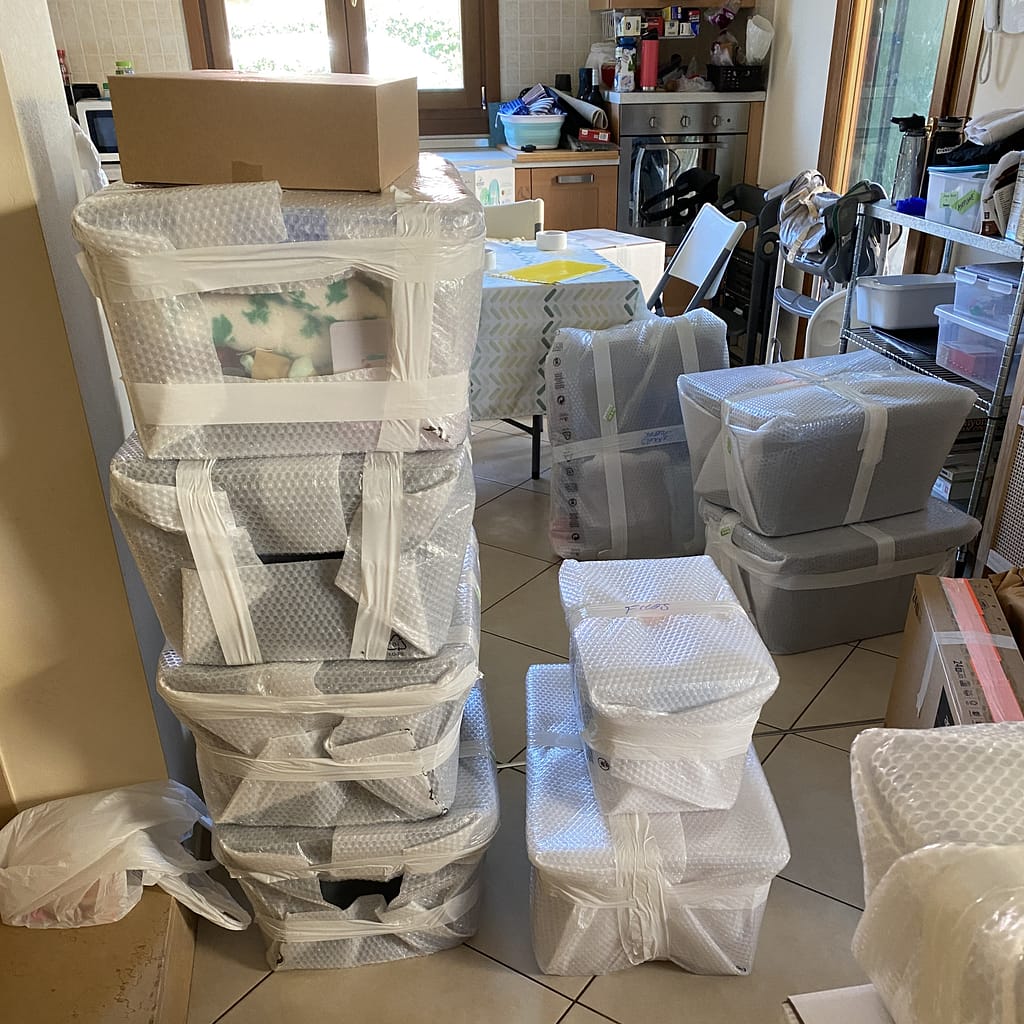
Before your moving crew arrives, you want to designate one area of your house as a no-pack area. For me, this is usually a guest bedroom. If you’re moving CONUS to CONUS, your car or a personally rented moving van may be sufficient.
Usually, I make a large sign that says “NO PACK ROOM ” and tape it on the bedroom door. I make sure the door stays shut. If there are other off-limits areas in the house (say, under a bathroom sink or maybe the bathroom area altogether), I’ll put a sign or some bright duct tape in an “X” shape and write NO PACK on the tape.
Any items you don’t want the movers to box up should be in your no-pack room. This includes necessary paperwork like your PCS Binder, luggage for the airplane, passports, pets, things you want to sell or leave behind, and the like. You might consider putting your trash can in the no pack room. My husband and I usually keep our car keys in our pockets during moving day.
We’ve all heard horror stories of moving crews who don’t get the hint. While that certainly can happen, I have never had a problem with crews packing areas they shouldn’t. Usually, when the movers first arrive, either my husband or I will walk them through the house and show them where the no-pack areas are. If they have questions about items or what’s in a pre-packed box, we can answer that, too.
It’s Go Time – The Movers Are Here!
If your family lives on a military installation, your moving company is responsible for getting the crews onto the installation. It is not your responsibility (or your sponsors’) to sponsor moving crews. It’s worth noting that many bases now require visitors to have Real IDs. Calling your moving company in advance to ensure workers are all Real ID compliant may alleviate some stress on moving day.
The movers will arrive on pack day sometime between 8 a.m. and 5 p.m., ideally earlier rather than later. Crews can stay as late as 9 p.m. The moving crew should have everything they need to complete their job: tape, boxes, moving blankets, and packing material. Depending on the size of your shipment, packing and loading may happen the same day.
Once packed, crews usually write generic contents on the boxes (pictures, gym equipment, books). Everything will have an inventory sticker on it, including furniture, boxes, or totes wrapped in bubble wrap. These stickers correspond to the numbers on your inventory sheet.
Having more than one adult present on packing day is helpful if you can. This way, two people can walk around, watch the crew pack, and be available for questions. If you dislike how your items are packed, don’t be afraid to speak up. It can be daunting to say something to people who do this job every day. But it’s your stuff, and all your stuff, and you have a say in how it’s handled.

Throughout the day, I walk through the house taking photos, especially before loading the truck. This way, I can count boxes in the pictures and estimate how many items should be on the inventory sheet.
Many families feed the packing crews during move day. However, this is not a requirement. Movers get a dedicated lunch break and shouldn’t expect to be fed (or tipped). However, we always have water, soda, or Gatorade in the fridge for the crew.
High Value List
One of the inventory sheets you will have to sign on moving day is a “high value” sheet. The purpose of the high value inventory is to ensure items of your choosing are on a separate, more specific inventory. Rather than a box of “kitchen dishes,” your high value sheet may say “blue and white polish pottery, 3 salad bowls.”
You can designate anything you like as a high value item. Some families will mark sentimental or irreplaceable items as high value. We usually include some electronics, like our TV or Xbox. It’s essential to make sure you have copies of serial numbers or other identifying information before the movers box up items. If your high value items are electronics, take videos of them in working order the day before the movers arrive. If you have them, have movers pack the items in the original boxes.
Your high value items may be packed in boxes with other ordinary items, but they will be inventoried separately on the high value sheet. These boxes will also be marked as containing a high value item.
Other items that you may consider high value are tools, electronics, gaming equipment, Lego sets, jewelry, appliances (washer, dryer, deep freezer), musical instruments, etc. If you can, you may consider hand carrying items that are irreplaceable. For example, I always hand carry important jewelry and some of my children’s sentimental items.
Pack Out Day vs Loading Day
Packing and loading can happen on different days. Depending on your family size and the size of your packing crew, you may require more than one day of packing. You can request that certain items, like mattresses and TVs, remain unpacked until loading day. Most of the time, if the packing and loading crews are different, packing materials are left behind to box up any remaining items. Loading crews don’t usually bring materials for packing.
Our shipments are usually small enough (and pre-packed enough) that we can manage packing and loading on the same day. If you’re traveling OCONUS, you’ll sign the stickers that are placed on the outside of the crates. The crates are nailed shut, which should happen in your presence. I also like to take photos of the stickers once they’re on the crates.

Sometimes, crews need to take items to a second location, like a warehouse, for crating. This has not happened to us, but I know it does happen. You can follow the movers to the warehouse and watch them move and crate your items.
Some families have a sticker or a stamp with their name and contact information to place on boxes before loading. Because our items have always been crated at our residence, we’ve never felt the need to do this. Often, crating doesn’t happen for moves within the US. Multiple families’ items can share a trailer, separated by some plywood. For a domestic move, labeling your boxes with contact information can help get any missing items returned to you. The time in between your packing and loading can be a good time to sticker boxes.
After the Dust Settles?
After or towards the end of loading, it will be time to sign your inventory sheet. Some companies are using tablets and digital inventories, while others still do handwritten ones.
It’s important to review your inventory thoroughly before signing. Movers will note the condition of items and list if anything is broken or dirty. Some companies have a habit of listing all furniture as damaged upon packing out. If you don’t agree, make a note on the inventory sheet prior to signing. This sheet will be one of the determining factors for paying out claims if items arrive damaged or missing. You want to make sure it’s accurate. If you’re questioning an inventory item, refer to your photos from earlier in the day. You may be able to find the box, and seeing it in a room or with other items can jog your memory.
Along with the regular inventory, you’ll also sign your high value inventory sheet.
Before the moving crew leaves, inspect your house for damage. You will need to sign a form stating that the crew did not damage any part of the house (think door frames, floors, walls, etc.) Make sure you agree that the house is in good condition before signing.

Who To Call If Things Go South
Unfortunately, not all packing and loading crews are equal. Sometimes, crews and families have different ideas of how the day should go. If you have a problem with your packing or loading crew, here are some people you can call.
•Move Coordinator. You can find their contact information in the system you scheduled your move (DPS or MilMove with HomeSafe Alliance). Your move coordinator works as a service representative for your Transportation Service Provider (TSP).
•Local Transportation Office or Local Quality Assurance (QA) Inspector. You can find their contact info on move.mil under customer service, where you input your zip code. Their contact information should also be listed on your installation’s webpage.
•Local Personal Property Processing Office or Personal Property Shipping Office (JPPSO/PPSO). Contact information is on move.mil.
•Transcom Hotline. This is for weekend and after-hours issues. Contacts are found on Military OneSource
•Transportation Service Provider (TSP) chain of command.
Helpful Links + Groups
PCS Like a Pro – Your Smooth Move (This is a private group you need an invitation to. Likely someone you know is already in it!)
PCS Like a Pro (This is a public group)
PCS Like A Pro – Lost and Found – An excellent group for helping service members find items lost during a PCS
Defense Personal Property Tender of Service Regulations
Statement by Pentagon Regarding HomeSafe Alliance Contract Termination
Navy Times: DOD Terminated Troubled HomeSafe Contract for Military Moves
Joint Travel Regulations – Chapter 5 covers PCS
United States Transportation Commission Regulations
Moving day is a huge step toward getting you and your family to your next duty station. It often comes with a lot of stress and uncertainty, but know that you are prepared. You can do this!

Looking for More Help During Your PCS?
Check out my free eBook Moving with the Military: Preparing for an OCONUS move. In it, I offer a more comprehensive packing list to help you think through what to pack for your move. You can also find all our PCS-related posts in one spot by clicking the Moving + PCS Season graphic.


Note: Any links included in this post are to be helpful and for your personal use. Product links are not affiliate links.